


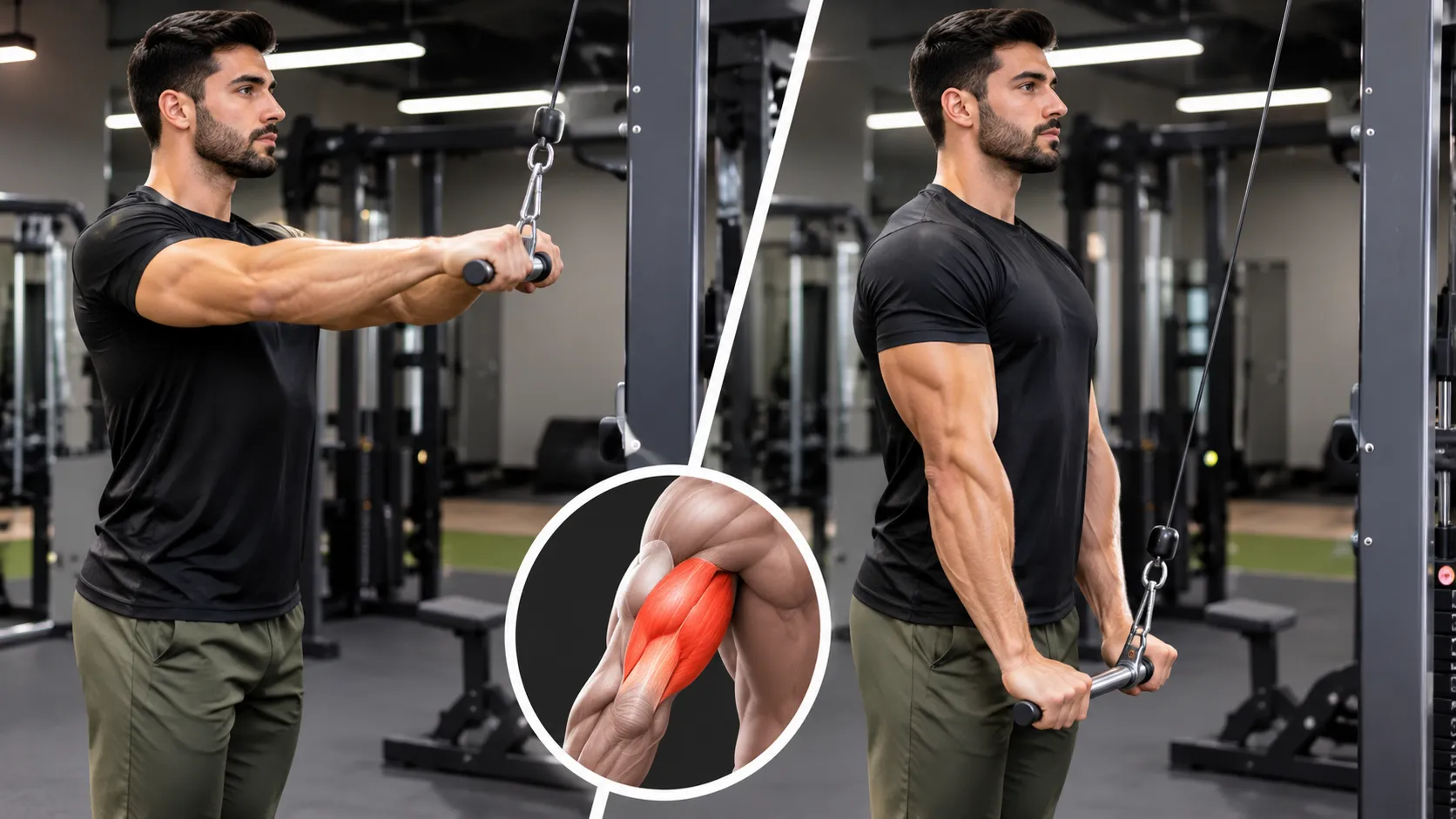
The straight arm pushdown is a popular upper-body exercise that primarily targets the back muscles, especially the latissimus dorsi. It is commonly performed using a cable machine and is useful for developing shoulder control, improving pulling strength, and strengthening the muscles involved in upper-body movement. Unlike traditional pulling exercises, this movement keeps the elbows nearly straight while moving the arms downward.
Understanding the straight arm pushdown can help beginners and experienced gym users perform it more effectively. Proper technique, controlled movements, and suitable resistance are important for getting the most from this exercise. This guide explains what a straight arm pushdown is, how it works, which muscles it targets, its benefits, common mistakes, and practical training tips.
What Is a Straight Arm Pushdown?
A straight arm pushdown is a strength-training exercise that involves pulling a cable attachment downward while keeping the elbows slightly bent. The movement mainly occurs at the shoulder joints and emphasizes the latissimus dorsi muscles. It is typically performed while standing in front of a high cable pulley. The exercise is also commonly called a straight arm pulldown.
Unlike exercises that involve significant elbow bending, the straight arm pushdown focuses on shoulder extension. The arms move from a raised position toward the front of the thighs while the torso remains relatively stable. This movement allows the back muscles to contribute without requiring substantial assistance from the biceps. As a result, it is often used as an accessory exercise during back workouts.
The straight arm pushdown can be performed with different attachments, including a straight bar or rope. Each variation may slightly change hand positioning and comfort without fundamentally changing the exercise. Beginners should prioritize proper movement mechanics before increasing resistance. Learning this technique helps establish better control during other pulling exercises and upper-body training movements.
How Does the Straight Arm Pushdown Work?
The straight arm pushdown works through shoulder extension, where the upper arms move downward and backward relative to the torso. The latissimus dorsi muscles provide much of the force required for this movement. Other supporting muscles help stabilize the shoulders and maintain body position. Keeping the elbows relatively fixed reduces the amount of movement occurring at the elbow joints.
At the beginning of the exercise, the arms are positioned forward and above shoulder level. The exerciser then pulls the cable attachment downward in a smooth arc toward the thighs. During this movement, the shoulder joints change position while the elbows remain slightly bent. The cable machine provides resistance as the muscles work to control the attachment.
The return phase is equally important because the back muscles continue working while resisting the upward movement. Allow the attachment to rise gradually without losing control of your shoulders or torso. Avoid letting the weight stack pull your arms upward suddenly. Controlled movement in both directions helps maintain consistent technique and appropriate muscular engagement.
Muscles Worked During the Straight Arm Pushdown
The primary muscle targeted by the straight arm pushdown is the latissimus dorsi, often called the lats. These broad muscles extend across much of the back and help move the upper arms toward the body. They are involved in pulling, climbing, and several other upper-body movements. Strengthening them can support a well-rounded resistance-training program.
The teres major also contributes to shoulder extension during the exercise. The posterior deltoids may assist with moving the arms backward, depending on the shoulder position and movement path. Muscles around the shoulder blades help maintain stability throughout each repetition. Their involvement supports coordinated movement rather than replacing the primary action of the lats.
Core muscles provide additional support by helping maintain a steady torso during the pushdown. The abdominal muscles and spinal stabilizers work to limit unnecessary movement when resistance is applied. The triceps may contribute to maintaining elbow position, although they are not the main target. Understanding these roles helps distinguish the exercise from triceps-focused cable pushdowns.
Benefits of Straight Arm Pushdowns
One major benefit of straight arm pushdowns is their ability to emphasize the latissimus dorsi through a relatively simple movement pattern. Since the elbows remain nearly fixed, the exercise involves less active elbow flexion than many rowing movements. This makes it a useful addition to back-focused strength training. It can complement compound exercises that recruit several upper-body muscle groups.
Straight arm pushdowns also encourage awareness of shoulder positioning and controlled arm movement. Beginners can practice moving their arms through a comfortable range while maintaining a stable torso. This coordination may support learning other exercises that involve the back and shoulders. However, it should not replace broader strength training or individual mobility work.
Another advantage is the flexibility offered by cable resistance. Users can adjust the weight, attachment, and range of motion according to their comfort and experience. This adaptability makes the exercise suitable for many general fitness programs. When performed with appropriate technique, it provides a convenient way to add focused back training without complicated equipment arrangements.
How to Perform a Straight Arm Pushdown Correctly
Begin by adjusting a cable machine so the pulley is positioned above your head. Attach a straight bar or rope and select a manageable resistance level. Stand facing the machine with your feet comfortably apart and your knees slightly bent. Hold the attachment with your arms extended forward while maintaining a small, natural bend in your elbows.
Keep your torso stable and gently engage your abdominal muscles before starting the movement. Pull the attachment downward in a controlled arc toward the front of your thighs. Focus on moving through your shoulders instead of bending your elbows to move the weight. Stop at a comfortable position without forcing your arms backward beyond their natural range.
Slowly guide the attachment upward until your arms return to the starting position. Maintain control throughout the movement and avoid allowing the resistance to pull your shoulders suddenly. Breathe naturally, exhaling during the downward phase and inhaling as you return. Begin with a small number of comfortable repetitions while learning the correct movement pattern.
Proper Body Position and Exercise Form
Good body positioning helps the straight arm pushdown target the intended muscles without unnecessary compensation. Stand with your feet positioned comfortably and keep a slight bend in your knees. A small forward lean from the hips may help create an appropriate pulling angle. Maintain a neutral spine rather than excessively rounding or arching your back.
Your shoulders should move naturally throughout the exercise without being forced into a rigid position. Keep your elbows slightly bent and avoid changing that angle dramatically during each repetition. The movement should come mainly from your shoulder joints. If you need to bend your elbows significantly or swing your body, the resistance may be too challenging.
Hand placement also affects how comfortable the exercise feels. A straight bar generally allows an overhand grip, while a rope provides more flexibility for wrist positioning. Choose the attachment that permits smooth shoulder movement without wrist discomfort. Consistent form is more important than using a particular attachment or copying someone else’s exact stance.
Straight Arm Pushdown vs. Lat Pulldown
The straight arm pushdown and traditional lat pulldown both train the back muscles, but they use different movement patterns. Straight arm pushdowns emphasize shoulder extension while keeping the elbows relatively fixed. Traditional lat pulldowns involve both shoulder movement and substantial elbow bending. This difference affects how the back and arm muscles contribute to each exercise.
During a traditional lat pulldown, the biceps and other elbow-flexing muscles help pull the attachment downward. In a straight arm pushdown, the elbows remain nearly extended, reducing the amount of active elbow flexion. The lats remain important in both exercises. Neither movement is automatically superior because each serves a different purpose within strength training.
Traditional lat pulldowns are generally useful for developing vertical pulling strength through a compound movement. Straight arm pushdowns provide an accessory exercise that emphasizes shoulder extension and controlled lat engagement. Including both may create a more varied back-training session. The best combination depends on your fitness goals, equipment access, and individual exercise tolerance.
Straight Arm Pushdown vs. Triceps Pushdown
Straight arm pushdowns are sometimes confused with triceps pushdowns because both exercises commonly use high cable pulleys. However, they target different primary muscles and involve different joint movements. Straight arm pushdowns mainly train the lats through shoulder extension. Triceps pushdowns focus on elbow extension, which primarily involves the triceps muscles.
During a triceps pushdown, the upper arms generally stay close to the torso while the elbows bend and straighten. During a straight arm pushdown, the elbows remain almost fixed as the arms move downward from the shoulders. These distinct movement patterns explain why each exercise belongs in a different training category. Recognizing the difference helps prevent technique confusion.
Both exercises can be included in a balanced upper-body workout when appropriate. Straight arm pushdowns may be used during back training, while triceps pushdowns commonly appear in arm or pushing sessions. They should not be treated as interchangeable exercises. Selecting the correct movement depends on which muscles and physical abilities you want to develop.
Common Straight Arm Pushdown Mistakes
Using too much weight is one of the most common mistakes during straight arm pushdowns. Excessive resistance can encourage swinging, elbow bending, or unnecessary movement through the lower back. These compensations reduce control and may make the exercise uncomfortable. Selecting a manageable weight allows you to focus on smooth shoulder movement and consistent technique.
Another common mistake is turning the exercise into a modified triceps pushdown. This happens when the elbows bend and straighten significantly instead of maintaining a relatively fixed position. The movement then shifts away from the intended shoulder-extension pattern. Keeping a slight, consistent elbow bend helps maintain the exercise’s focus on the back muscles.
Rushing through repetitions can also make the straight arm pushdown less effective. Allowing the cable attachment to return suddenly reduces control and may place unnecessary stress on the shoulders. Moving through an excessively large range can create similar problems. Use a comfortable range of motion and prioritize steady movements over completing repetitions quickly.
Straight Arm Pushdown Variations to Try
The straight bar pushdown is a common variation that uses an overhand grip on a fixed attachment. It provides a straightforward setup and makes it easier to maintain consistent hand spacing. Some people prefer this variation because the movement feels predictable and stable. However, wrist and shoulder comfort should determine whether the attachment suits you.
Rope straight arm pushdowns offer a different grip that allows the hands to move more independently. This flexibility can feel comfortable for individuals who prefer a neutral wrist position. The movement still relies primarily on shoulder extension rather than elbow bending. Keep the pulling path controlled and avoid turning the exercise into an exaggerated backward arm swing.
Resistance band straight arm pushdowns provide an alternative when a cable machine is unavailable. A securely anchored resistance band can create tension as the arms move downward. Band resistance changes throughout the movement, so the exercise may feel different from cable training. Use suitable equipment and follow manufacturer guidance to ensure the anchor remains secure.
How Many Sets and Reps Should You Do?
The appropriate number of sets and repetitions depends on your experience, technique, and overall training plan. Beginners can start with one or two manageable sets of approximately eight to twelve controlled repetitions. This provides an opportunity to practice the movement without adding unnecessary training volume. Choose resistance that allows you to maintain comfortable form.
People with more resistance-training experience may use two or three sets as part of a broader back workout. Moderate repetition ranges are often practical because they allow focused movement without requiring extremely heavy resistance. However, there is no single repetition target that suits everyone. Exercise selection and workload should reflect personal goals and recovery needs.
Rest between sets according to your breathing, muscular fatigue, and ability to repeat the movement correctly. There is no benefit in rushing when doing so causes your technique to deteriorate. Gradually adjust repetitions or resistance as the exercise becomes easier. Consistent, controlled training is generally more useful than attempting rapid increases in difficulty.
How to Add Straight Arm Pushdowns to Your Workout
Straight arm pushdowns can be included in back-focused workouts alongside rows and traditional lat pulldowns. Compound pulling exercises often come earlier in a session when greater strength and coordination are required. The straight arm pushdown can then provide additional focused training for the lats. This arrangement is practical but not a strict requirement.
Beginners may choose a simple routine that includes a comfortable rowing variation followed by straight arm pushdowns. Additional exercises can target other major muscle groups to support balanced development. Avoid increasing the total workload too quickly, especially when you are learning unfamiliar movements. Recovery between challenging training sessions remains important for maintaining consistent performance.
You can also perform light straight arm pushdowns during a technique-focused session. Start with a warm-up and practice the movement using resistance that feels easy to control. Pay attention to shoulder comfort, elbow positioning, and steady breathing. If pain or unusual discomfort occurs, stop the exercise and seek appropriate professional guidance when necessary.
Safety Tips for Straight Arm Pushdowns
Safety begins with selecting equipment that is properly maintained and suitable for your experience level. Check that cable attachments are securely connected and that the weight setting is manageable. Keep your workout area free from obstacles that could affect your balance. If you are unfamiliar with the machine, ask a qualified trainer to explain its operation.
Pay attention to shoulder mobility and avoid forcing your arms into uncomfortable positions. Some people may need a shorter movement range because of individual flexibility or previous injuries. Adjust the exercise when necessary rather than pushing through pain. People recovering from shoulder injuries should seek appropriate guidance before introducing unfamiliar resistance exercises.
Controlled resistance and steady technique are more important than lifting heavy weights. Avoid using sudden body movements to pull the attachment downward or allowing the weight stack to return abruptly. Take breaks when fatigue begins affecting your form. These habits help make the straight arm pushdown a more manageable part of a balanced fitness routine.
Tips to Improve Your Straight Arm Pushdown Technique
Improving your technique begins with understanding which joints should move during the exercise. Focus on bringing your upper arms downward while keeping your elbows slightly bent and relatively stable. Maintain a comfortable torso position and avoid using momentum to move the attachment. Practicing with lighter resistance can make the movement pattern easier to understand.
Another helpful strategy is to pay attention to how the back muscles contribute during each repetition. Move slowly enough to notice the muscles working without exaggerating tension or forcing particular positions. Keep your breathing natural and avoid holding your breath unnecessarily. Consistent movement quality is more important than trying to create an intense muscular sensation.
Finally, review your technique periodically as your strength and confidence improve. A qualified fitness professional can help identify movement errors and recommend suitable modifications. You can also evaluate whether the exercise remains comfortable and fits your overall training goals. Gradual adjustments support progress while reducing unnecessary strain from poorly controlled movements.
Conclusion
The straight arm pushdown is a useful resistance-training exercise that primarily strengthens the latissimus dorsi through shoulder extension. It differs from traditional lat pulldowns and triceps pushdowns because the elbows remain relatively fixed during the movement. Cable resistance provides a convenient way to practice controlled back training. Understanding these basic mechanics helps you perform the exercise correctly.
Proper technique involves maintaining a stable torso, slightly bent elbows, and smooth arm movements. Beginners should choose manageable resistance and avoid using momentum or forcing uncomfortable shoulder positions. Different attachments can provide flexibility based on individual preferences and equipment availability. Paying attention to form helps make each repetition more purposeful.
Straight arm pushdowns can complement rows, lat pulldowns, and other upper-body exercises within a balanced fitness program. Their usefulness depends on your goals, training experience, and ability to perform the movement comfortably. Start gradually, respect your recovery needs, and adjust the exercise when necessary. Consistent technique and realistic progression support long-term strength development.
FAQs
What Muscles Does the Straight Arm Pushdown Work?
The straight arm pushdown primarily targets the latissimus dorsi muscles in the back. The teres major, posterior deltoids, and core stabilizers also contribute to the movement and body control.
Is the Straight Arm Pushdown Good for Beginners?
Yes, straight arm pushdowns can be suitable for beginners when performed with manageable resistance and proper technique. Start with controlled repetitions and focus on shoulder movement instead of lifting heavy weights.
Is a Straight Arm Pushdown the Same as a Lat Pulldown?
No, the movements are different. Straight arm pushdowns emphasize shoulder extension with relatively fixed elbows, while traditional lat pulldowns involve significant elbow bending and greater participation from the biceps.
Can You Do Straight Arm Pushdowns Without a Cable Machine?
Yes, a securely anchored resistance band can provide an alternative to a cable machine. However, resistance changes throughout the movement, so the exercise may feel different from a traditional cable pushdown.
How Often Should You Do Straight Arm Pushdowns?
Straight arm pushdowns can be included in back-training sessions according to your overall exercise schedule. Allow appropriate recovery between demanding workouts and adjust frequency based on experience, comfort, and training goals.