


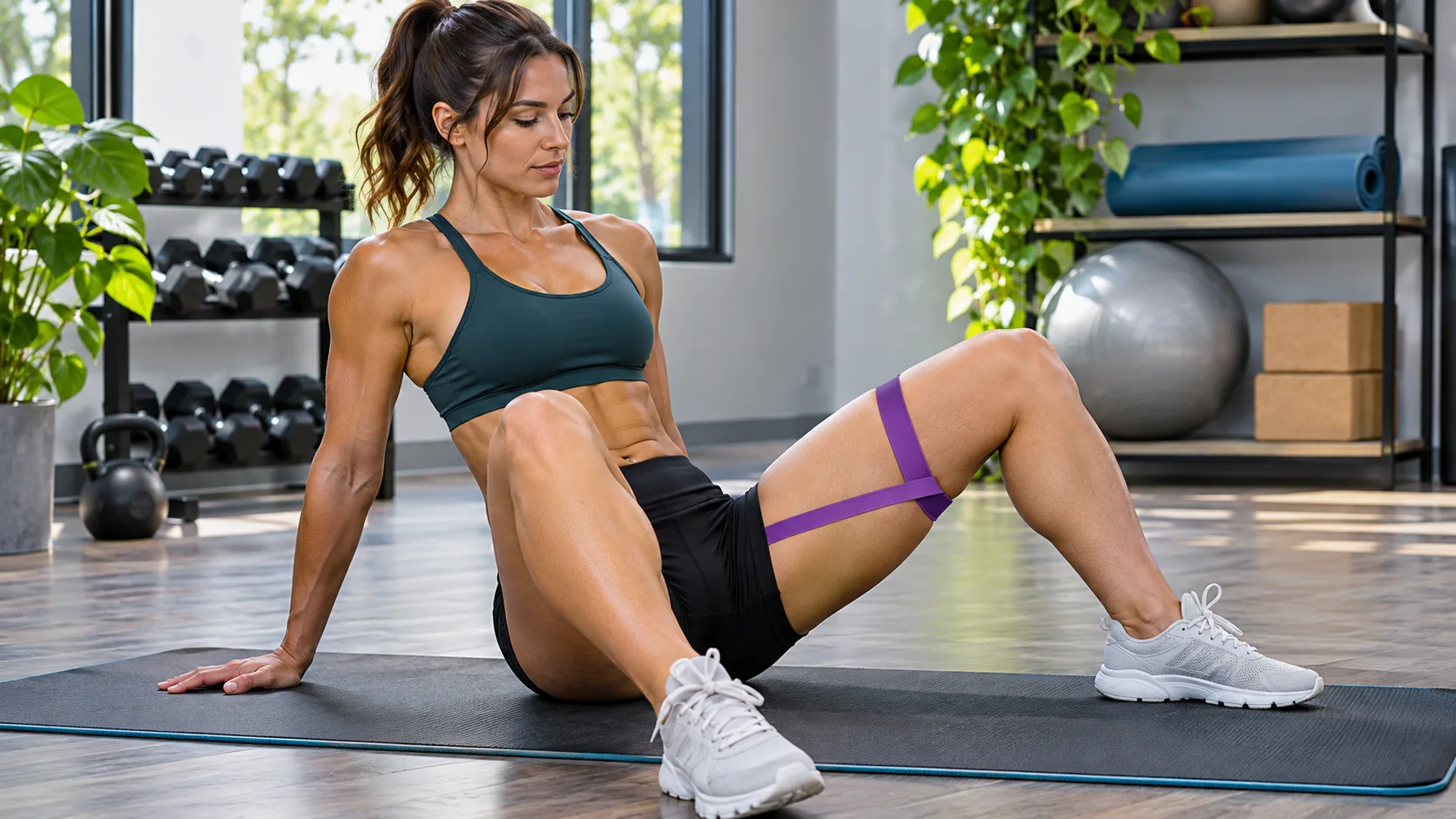
Healthy hip rotation helps your legs move comfortably when you sit, walk, turn, or exercise. Hip external rotation exercises focus on turning your thigh outward from the hip joint without twisting your knee or foot. With the right technique, gentle mobility work and controlled strengthening can improve movement quality, support joint stability, and make everyday activities feel more comfortable.
What Is Hip External Rotation?
Hip external rotation is the movement that turns your thigh outward from your body’s center. It happens when you cross one ankle over the opposite knee or gently move your knee outward while seated. This movement occurs at the hip joint, where the thighbone rotates inside the socket while the surrounding muscles provide support.
Your hip is a ball-and-socket joint designed to move in several directions. External rotation is one of these movements, alongside internal rotation, flexion, extension, abduction, and adduction. Each movement helps your legs respond to different positions, making healthy hip mobility important for comfortable walking, sitting, bending, and changing direction.
The amount of external rotation available differs from person to person because of joint structure, flexibility, and muscle control. Some people naturally have a wider range, while others experience stiffness or restricted movement. Regular hip external rotation exercises may help improve usable mobility, but forcing the joint beyond its comfortable range is unnecessary and potentially harmful.
Why Hip External Rotation Exercises Matter
Hip external rotation supports everyday activities that involve turning, stepping, and adjusting your leg position. It also contributes to movements such as squatting, sitting cross-legged, and participating in recreational sports. When your hips move comfortably through their available range, everyday activities may require fewer compensations from surrounding joints and muscles.
Strengthening the muscles responsible for external rotation can improve control around the hip joint. These muscles help maintain steady leg positioning during single-leg activities, including walking and climbing stairs. Better control may support efficient movement patterns, although hip exercises alone cannot prevent every knee, hip, or lower-back problem.
Limited hip rotation can sometimes make certain movements feel difficult or uncomfortable. However, restricted motion may result from several factors, including muscle tension, joint anatomy, or an underlying condition. Combining gentle mobility drills with appropriate strengthening exercises can help address manageable stiffness while building confidence in your hip’s natural movement abilities.
Which Muscles Control Hip External Rotation?
Several deep muscles around your hip work together to rotate your thigh outward. These include the piriformis, obturator internus, obturator externus, superior gemellus, inferior gemellus, and quadratus femoris. Although these muscles are relatively small, they contribute to controlling the femoral head and guiding rotation during different lower-body movements.
The gluteus maximus is another important muscle involved in hip external rotation. It is particularly active when you extend your hip or perform movements that require powerful lower-body support. Parts of the gluteus medius and other surrounding muscles can also contribute, depending on your hip position and the specific exercise being performed.
These muscles rarely work alone during daily activities or structured exercise routines. Instead, they coordinate with the abdominal muscles, thigh muscles, and other hip stabilizers to maintain comfortable movement. Understanding their combined role explains why an effective hip mobility routine should include both targeted rotation exercises and broader strengthening activities.
How to Prepare for Hip External Rotation Exercises
Before starting, spend a few minutes warming up with comfortable movements such as easy walking or gentle marching. A warm-up gradually increases blood flow and gives your joints an opportunity to move through familiar positions. You do not need an intense workout beforehand, especially when your goal is improving basic hip mobility.
Choose a stable exercise surface and wear clothing that allows your legs to move freely. A supportive chair, exercise mat, and optional resistance band are enough for most beginner-friendly hip external rotation exercises. Start with bodyweight movements so you can understand the correct technique before introducing additional resistance or more challenging positions.
Pay attention to how your hips feel throughout each exercise rather than chasing the largest possible movement. Mild stretching or muscular effort may be normal, but sharp pain, catching, or a strong pinching sensation is a reason to stop. If you have an existing hip injury, recent surgery, or significant joint symptoms, seek individualized guidance before beginning.
Seated Hip External Rotation Exercise
The seated hip external rotation exercise is a practical starting point for beginners who want to explore their available mobility. It allows you to practice rotating the thigh without needing to balance or support your body on the floor. You can perform this movement on a sturdy chair, making it convenient for home routines.
Sit upright with both feet flat and your knees bent at approximately 90 degrees. Keep one thigh facing forward and gently move that foot inward toward the opposite leg, allowing the working thigh to rotate outward. Return your foot slowly to its starting position without twisting your trunk or forcing your knee into an uncomfortable position.
Perform 8–12 controlled repetitions on each side, using a small range if necessary. Keep your pelvis steady and avoid lifting the working thigh off the chair to create extra movement. Once the exercise feels comfortable, focus on slower repetitions and smoother control rather than trying to increase the distance your foot travels.
Supine Figure-Four Stretch for Hip Mobility
The supine figure-four stretch is a common way to explore external rotation while gently stretching the muscles around the buttocks. Because you perform it while lying on your back, the floor supports your body and reduces balance demands. This makes the position useful for people who find standing hip stretches uncomfortable.
Lie on your back with your knees bent and both feet resting on the floor. Place your right ankle across your left thigh, just above the knee, while keeping your right foot relaxed but supported. If comfortable, lift your left leg and gently draw it toward your chest until you notice a mild stretch around the right hip.
Hold the position for approximately 20–30 seconds while breathing normally and keeping your shoulders relaxed. Repeat on the opposite side, completing one or two comfortable stretches for each hip. If the position produces knee discomfort or pinching near the front of your hip, reduce the stretch or choose a different movement.
Clamshell Exercise for Stronger Hip Rotators
Clamshells are among the most accessible exercises for strengthening the muscles involved in hip external rotation. They primarily challenge the outer hip and gluteal muscles while keeping your feet together throughout the movement. The exercise requires no equipment and can be adjusted easily for beginners or people returning to regular physical activity.
Lie on your side with your hips and knees bent, stacking one leg directly over the other. Keep your feet touching and slowly lift your upper knee without rolling your pelvis backward or separating your heels. Pause briefly when you reach a comfortable height, then lower your knee with control rather than allowing gravity to complete the movement.
Begin with 8–12 repetitions per side and perform one or two sets according to your comfort. You should notice muscular effort around the side or back of your hip rather than discomfort inside the joint. A light resistance band placed above your knees can increase the challenge once you can maintain consistent form.
90/90 Hip Rotation Exercise for Better Mobility
The 90/90 hip rotation exercise explores both external and internal rotation in a seated floor position. One hip is positioned in external rotation while the other is positioned in internal rotation, creating a useful mobility combination. It can be challenging initially, so pillows or yoga blocks may help you maintain a comfortable upright posture.
Sit on the floor with both knees bent and your feet positioned wider than your hips. Gently lower both knees toward one side, aiming for roughly 90-degree bends without forcing either hip into position. Keep your hands behind you for support, then slowly move your knees through the center and toward the opposite side.
Complete 5–8 slow transitions while keeping the movement comfortable and controlled. Avoid pulling your knees downward or twisting aggressively through your lower back to achieve a deeper position. If the floor setup is uncomfortable, practice smaller seated rotations in a chair until your hip mobility and confidence improve.
Glute Bridge With Knee Press-Outs
A glute bridge with gentle knee press-outs combines hip extension with controlled outward movement at the hips. It strengthens the gluteal muscles while encouraging awareness of knee and pelvis positioning. Although this is not an isolated external rotation exercise, it can complement more targeted drills in a balanced strengthening routine.
Lie on your back with your knees bent and your feet flat, approximately hip-width apart. Lift your hips slowly until your shoulders, pelvis, and knees form a comfortable diagonal line without arching your back. While holding the bridge, gently press your knees outward a small amount, then return them to their starting alignment.
Lower your hips slowly and repeat the movement 8–12 times, resting whenever your technique begins to change. Keep your feet planted and avoid allowing your knees to collapse inward between repetitions. Once you can perform the exercise comfortably, a light resistance band above your knees may provide additional muscular challenge.
Fire Hydrant Exercise for Hip Control
The fire hydrant exercise develops strength and coordination around the outer hip while training controlled leg movement. It combines hip abduction with rotational components, making it a useful addition to a broader external rotation program. Because it involves supporting your body on your hands and knees, comfortable positioning is particularly important.
Begin on all fours with your hands beneath your shoulders and your knees beneath your hips. Keep one knee bent and slowly lift it outward to the side without shifting your weight dramatically or rotating your pelvis. Raise the leg only as far as you can maintain a steady trunk, then return it gently to the floor.
Start with 8–10 repetitions per side, concentrating on maintaining an even breathing pattern throughout the exercise. Avoid lifting your leg excessively high because this often encourages lower-back movement instead of controlled action at the hip. If kneeling or supporting weight through your wrists feels uncomfortable, choose a seated or lying exercise instead.
How to Build a Beginner Hip Rotation Routine
A balanced hip external rotation routine should include both gentle mobility exercises and movements that strengthen the surrounding muscles. Beginners can start with seated rotations, figure-four stretches, and clamshells before adding more demanding exercises. Selecting a few movements you can perform correctly is usually more productive than completing many exercises with inconsistent technique.
For a simple session, perform 8–12 seated rotations per side, followed by a comfortable figure-four stretch. Next, complete one or two sets of clamshells and finish with a small number of 90/90 transitions if the position feels suitable. This approach combines controlled movement, gentle stretching, and strengthening without making the routine unnecessarily complicated.
Practice two or three days per week initially, allowing recovery between harder strengthening sessions. As your control improves, you can gradually add repetitions, a light resistance band, or exercises such as bridges and fire hydrants. Progress should depend on comfortable movement and consistent technique rather than how quickly you achieve a deeper stretch.
Common Mistakes and When to Get Help
One common mistake is moving too quickly through exercises without controlling the pelvis and lower back. This can make the movement appear larger while reducing the work performed by the intended hip muscles. Slow repetitions, steady breathing, and attention to your starting position help prevent unnecessary compensation and improve the quality of each exercise.
Another mistake is forcing hip rotation because you believe greater flexibility automatically means better joint health. Hip anatomy varies, and some people have natural limitations that stretching cannot safely change. Avoid pushing through pain, twisting your knees to imitate hip movement, or adding resistance before you can perform the exercise comfortably.
Persistent pain, repeated catching or locking, unexplained weakness, or worsening mobility deserves professional assessment rather than continued stretching. A physical therapist or qualified healthcare professional can evaluate whether your symptoms involve muscle control, joint structure, or another issue. Seek prompt medical care for severe pain, inability to bear weight, or symptoms following a significant injury.
Conclusion
Hip external rotation exercises can be a useful part of maintaining comfortable movement and developing better control around your hips. Simple exercises such as seated rotations, clamshells, and figure-four stretches offer accessible starting points for beginners. The goal is to improve movement quality within your comfortable range rather than forcing your hips into positions they cannot naturally achieve.
A consistent routine should combine gentle mobility work with strengthening exercises that support the surrounding muscles. Starting slowly allows you to understand each movement and recognize when your technique needs adjustment. As strength and coordination develop, gradually increasing the challenge can help you build a more balanced and sustainable exercise routine.
Most importantly, listen to your body and adjust exercises according to your comfort, experience, and individual needs. Hip mobility differs naturally between people, so progress does not need to look identical for everyone. With patience, controlled practice, and appropriate professional support when necessary, you can work toward healthier and more confident hip movement.
Frequently Asked Questions (FAQs)
What are the best hip external rotation exercises for beginners?
Seated hip rotations, clamshells, and gentle figure-four stretches are useful beginner options. They require minimal equipment, are easy to modify, and allow you to practice controlled movement without placing excessive demands on your hips.
How often should I perform hip external rotation exercises?
Beginners can try gentle mobility exercises several times a week and strengthening exercises around two or three times weekly. Adjust the frequency based on comfort, recovery, and whether symptoms appear during or after exercise.
Can hip external rotation exercises help with hip tightness?
These exercises may improve comfortable movement when stiffness relates to muscle tension or limited movement practice. However, not all hip tightness responds to stretching, particularly when joint structure or an underlying medical condition contributes.
What causes limited hip external rotation?
Limited external rotation can result from muscle stiffness, movement habits, joint anatomy, previous injuries, or certain hip conditions. A healthcare professional can help determine the cause when restriction is painful, persistent, or affects everyday activities.
Should hip external rotation exercises cause pain?
No, these exercises should not cause sharp or worsening pain. Mild muscular effort or gentle stretching may be normal, but stop if you experience pinching, catching, or joint discomfort, and seek guidance if symptoms persist.