


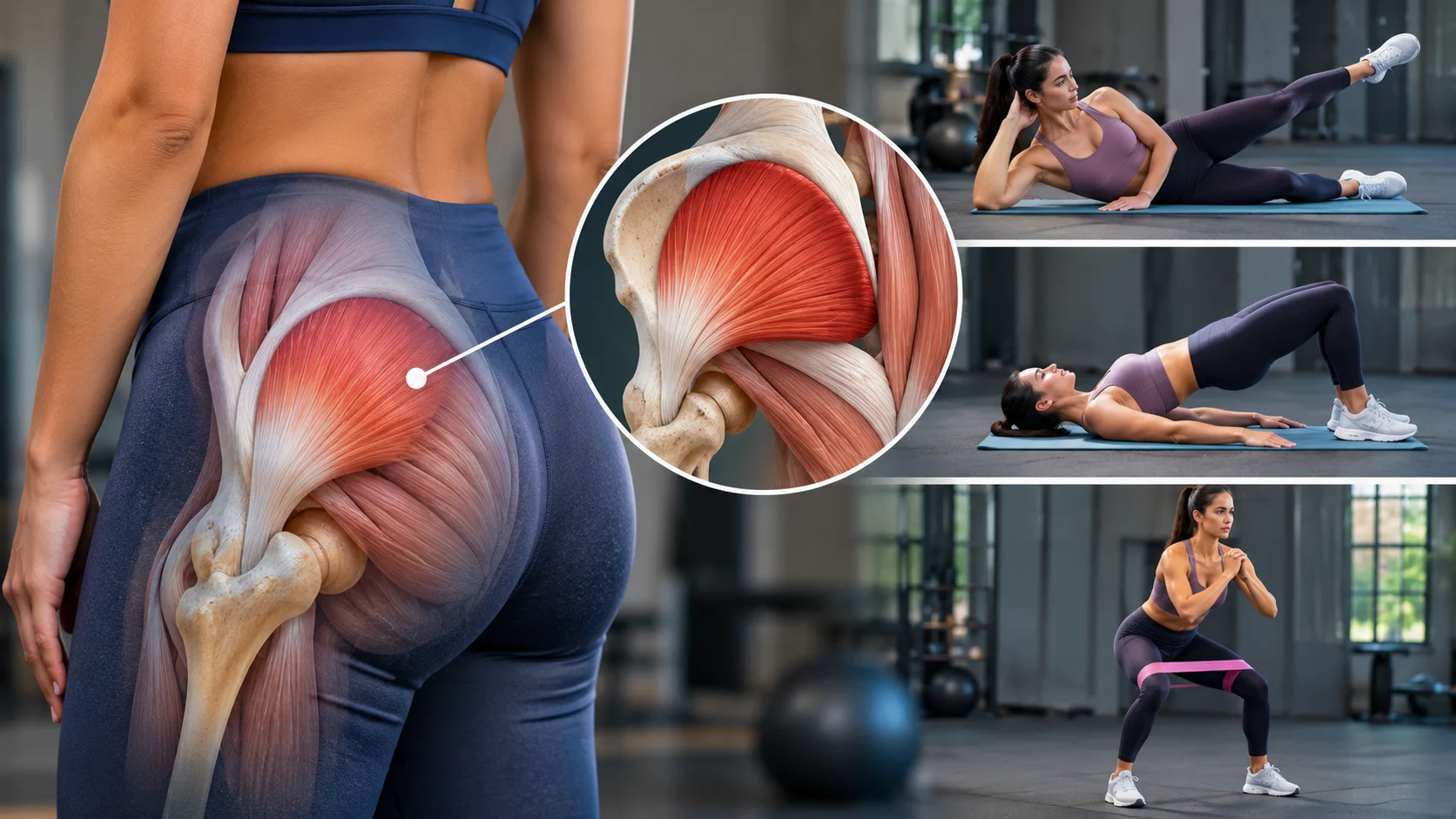
The glute medius is an important muscle that helps your body stay balanced, stable, and comfortable during everyday movement. Whether you are walking, climbing stairs, running, or standing on one leg, this muscle plays an essential role in controlling your hips. However, many people do not know where it is located or why it matters.
Weakness, irritation, or injury affecting the gluteus medius can contribute to discomfort around the outer hip and difficulty performing certain movements. The muscle works alongside other hip muscles to support the pelvis and maintain proper lower-body coordination. Understanding its function can help you recognize potential problems and develop healthier movement habits.
This guide explains the glute medius location, anatomy, functions, common injuries, and symptoms associated with muscle weakness. You will also learn about strengthening exercises, stretching techniques, recovery strategies, and when professional medical evaluation may be necessary.
What Is the Glute Medius?
The glute medius, formally called the gluteus medius, is one of the three major gluteal muscles. It works alongside the gluteus maximus and gluteus minimus to support hip movement and pelvic stability. Although it receives less attention than the larger gluteus maximus, its functional importance is considerable.
This muscle helps control the position of the pelvis during standing and walking. It also contributes to moving the thigh outward and controlling certain rotational movements of the hip. These actions are necessary for maintaining balance and coordinating movements during daily activities and exercise.
The gluteus medius is particularly active when the body places weight on one leg. During walking, for example, it helps prevent the pelvis from dropping excessively on the opposite side. Proper muscle function supports efficient movement, although overall stability depends on several muscles and joints working together.
Where Is the Glute Medius Located?
The glute medius is located on the outer surface of the pelvis, beneath part of the gluteus maximus. It extends from the outer surface of the ilium, one of the bones forming the pelvis, toward the upper portion of the thigh bone. This position allows it to influence hip movement and pelvic control.
The muscle attaches to the greater trochanter, a prominent bony structure near the top of the femur. Its broad, fan-shaped arrangement provides leverage for several movement directions. Different muscle fibers contribute to hip abduction, rotation, and stability depending on the position of the leg.
You can roughly identify the glute medius region by locating the upper outer portion of your hip. However, the muscle lies beneath layers of tissue, and nearby structures can also contribute to discomfort. Pain in this area does not automatically mean the gluteus medius itself is injured.
Understanding Glute Medius Anatomy
The gluteus medius has a broad origin along the outer surface of the ilium and narrows toward its attachment on the greater trochanter. Its shape and position help distribute forces around the hip joint. The muscle is commonly described as having anterior, middle, and posterior fiber regions.
These regions contribute differently to hip movements depending on body position and muscle activation. The anterior fibers can assist with internal rotation and abduction, while the posterior fibers may assist with external rotation. However, their precise contributions change with joint position and the demands of each movement.
The superior gluteal nerve supplies the gluteus medius and is important for normal muscle activation. Nearby structures include the gluteus minimus, hip joint capsule, tendons, and connective tissues. Understanding these anatomical relationships helps explain why several different conditions can produce similar symptoms around the outer hip.
What Is the Main Function of the Glute Medius?
The primary function of the glute medius is hip abduction, which means moving the thigh away from the body’s midline. This movement occurs during activities such as stepping sideways or moving a leg outward. The muscle also contributes significantly to controlling the pelvis during weight-bearing activities.
When standing on one leg, the gluteus medius on the supporting side helps keep the pelvis relatively level. Without adequate muscular control, the opposite side of the pelvis may drop. This stabilizing function is important during walking, running, stair climbing, and other activities involving alternating single-leg support.
The glute medius also contributes to rotational control of the femur within the hip joint. This role helps coordinate lower-body movements and manage forces during physical activity. However, efficient movement depends on cooperation between the gluteal muscles, core muscles, and other structures surrounding the hips.
How the Glute Medius Supports Walking and Running
Walking requires the body to shift weight repeatedly between the left and right legs. During each single-leg support phase, the glute medius helps stabilize the pelvis. This action allows the body to move forward while maintaining control over the position of the trunk and lower limbs.
Running increases the demands placed on the muscles supporting the hips and pelvis. The gluteus medius contributes to managing movement forces during landing and weight transfer. Weakness or reduced coordination may influence running mechanics, although individual movement patterns vary considerably.
The muscle also works during climbing stairs, hiking, and walking across uneven surfaces. These activities challenge balance and require coordinated hip stabilization. Maintaining suitable strength and movement control can support comfortable activity, but pain or functional limitations may require assessment of several contributing factors.
Common Glute Medius Problems and Injuries
Several conditions can affect the glute medius muscle or its associated tendon. These include muscle strains, tendinopathy, and tendon tears. Such problems may produce pain around the outer hip, particularly during activities that place repeated demands on the hip abductors.
Gluteal tendinopathy is an important cause of lateral hip pain, often associated with greater trochanteric pain syndrome. Tendons may become painful and less tolerant of certain loads or positions. Symptoms can develop gradually, especially when activity levels increase faster than the tissues can comfortably tolerate.
Muscle strains may occur when the glute medius experiences excessive force or an unfamiliar movement demand. Symptoms can include localized pain and temporary reductions in function. Because hip pain has many possible causes, an accurate diagnosis requires more than identifying discomfort near the muscle.
Symptoms of Glute Medius Weakness
Glute medius weakness may contribute to difficulty maintaining pelvic stability during single-leg activities. Some people notice reduced control while standing on one leg, stepping sideways, or climbing stairs. However, weakness alone does not necessarily produce pain, and symptoms depend on several factors.
A noticeable pelvic drop during walking may occur when the hip abductor muscles cannot adequately stabilize the pelvis. This movement pattern is sometimes associated with a Trendelenburg gait. However, similar changes can also result from pain, neurological conditions, or other limitations affecting the hip.
People may also experience fatigue or difficulty completing exercises that challenge the hip abductors. These signs are not specific enough to confirm isolated glute medius weakness. A physical therapist or qualified healthcare professional can assess strength, balance, mobility, and movement patterns to identify potential contributing issues.
What Causes Glute Medius Pain?
Glute medius pain may result from muscle strain, tendon irritation, or increased mechanical demands around the outer hip. Changes in exercise intensity, repetitive loading, and certain sustained positions can influence symptoms. However, pain in this region may also originate from structures other than the gluteus medius.
Greater trochanteric pain syndrome is a common explanation for discomfort around the outside of the hip. It frequently involves the gluteal tendons and can become more noticeable when lying on the affected side. Walking, climbing stairs, and standing for prolonged periods may also aggravate symptoms.
Other possible causes include hip joint disorders, lower back conditions, and nerve-related problems. The exact location of pain does not always reveal its source. Persistent or worsening symptoms deserve assessment to distinguish muscle-related discomfort from conditions requiring different management approaches.
Glute Medius Tendinopathy Explained
Glute medius tendinopathy occurs when the tendon becomes painful and has difficulty tolerating certain mechanical loads. It is commonly associated with discomfort over the outer hip near the greater trochanter. The condition may develop gradually rather than following one obvious injury.
People with gluteal tendinopathy often report pain when lying on the affected side or performing activities that load the hip. Walking uphill, climbing stairs, and prolonged standing can sometimes increase symptoms. Certain positions that compress the tendon against nearby structures may also contribute to discomfort.
Treatment often focuses on education, activity modification, and gradually progressing suitable strengthening exercises. Complete inactivity is not usually the preferred long-term strategy, although temporary adjustments may be necessary. A healthcare professional can help determine appropriate loading levels and investigate other causes when symptoms do not improve.
Can a Weak Glute Medius Cause Knee Pain?
The glute medius contributes to controlling the position of the femur during weight-bearing movements. This role can influence how the hip and knee move together during activities such as squatting and running. Reduced hip strength may be one factor associated with certain knee pain conditions.
For example, some individuals with patellofemoral pain have measurable differences in hip muscle strength or movement control. However, research does not establish that glute medius weakness directly causes every case of knee pain. Symptoms often result from a combination of activity demands, tissue sensitivity, and individual characteristics.
Hip strengthening may be included in rehabilitation programs for selected knee conditions. These exercises can improve functional capacity when combined with appropriate activity management and other treatments. Persistent knee pain should be evaluated rather than assuming that strengthening one muscle will resolve every underlying problem.
How to Strengthen the Glute Medius
Strengthening the glute medius involves exercises that challenge hip abduction and pelvic stability. Suitable movements include side-lying leg raises, standing hip abduction, and selected single-leg balance activities. The best exercise depends on individual strength, symptoms, movement control, and training experience.
Begin with movements that can be performed comfortably and with good control. Gradually increasing repetitions, resistance, or exercise difficulty can help the muscle adapt over time. Avoid making sudden increases in training demand, particularly if you already experience discomfort around the outer hip.
Consistency is generally more useful than performing difficult exercises without adequate preparation. Allow appropriate recovery between demanding sessions and adjust activities if symptoms increase significantly. People with persistent hip pain or diagnosed tendon problems may benefit from a personalized rehabilitation program.
Side-Lying Leg Raises for Glute Medius Strength
Side-lying leg raises are commonly used to strengthen the hip abductor muscles. Begin by lying on one side with your lower leg positioned comfortably for support. Keep your upper leg relatively straight and aligned with your body before slowly lifting it upward.
Raise the upper leg through a comfortable range without twisting your pelvis backward. Lower it gradually while maintaining control over the movement. The goal is to challenge the outer hip muscles without using momentum or allowing other parts of the body to compensate excessively.
Start with a manageable number of repetitions based on your current ability. If the exercise causes significant outer hip pain, especially when lying on your side, choose an alternative movement. A physical therapist can help modify the exercise for people with gluteal tendinopathy or other hip conditions.
Clamshell Exercises and Their Benefits
Clamshell exercises are often included in programs targeting the gluteal muscles. To begin, lie on your side with your hips and knees comfortably bent. Keep your feet together while lifting the upper knee through a controlled range without rotating your entire pelvis.
This movement involves hip external rotation and can activate portions of the gluteal muscle group. The exact muscle contribution depends on technique and individual anatomy. Clamshells may be useful for introductory strengthening, although they do not replace every other type of hip exercise.
Perform the movement slowly and avoid forcing the knee higher than you can comfortably control. Resistance bands may be introduced when appropriate, but adding resistance is not necessary for everyone. If side-lying positions aggravate outer hip pain, ask a qualified professional about alternative strengthening options.
Standing Hip Abduction Exercises
Standing hip abduction provides another way to challenge the glute medius while maintaining an upright position. Stand beside a stable support and place your weight evenly through the supporting foot. Slowly move the opposite leg outward without leaning your trunk excessively to the side.
Keep the movement controlled and avoid turning your toes dramatically upward or outward. Return the leg toward the starting position without allowing momentum to dominate. The supporting leg also works to maintain balance, making this exercise useful for practicing controlled lower-body movement.
Beginners can perform the exercise without additional resistance. As strength improves, an appropriately selected resistance band may increase the challenge. If balancing feels difficult, maintain contact with a sturdy support and prioritize stability rather than attempting a larger movement range.
Are Glute Medius Stretches Helpful?
Stretching may help some people improve comfortable hip mobility or reduce feelings of muscular tightness. However, not every case of outer hip pain is caused by shortened muscles. The usefulness of stretching depends on whether discomfort originates from muscle tension, tendon irritation, or another condition.
Gentle hip mobility exercises can be appropriate when they do not aggravate symptoms. Avoid forcing the leg into uncomfortable positions or attempting intense stretches to overcome pain. People with gluteal tendinopathy may find that certain deep hip adduction stretches increase compression around sensitive tendons.
A balanced rehabilitation program may include mobility work, progressive strengthening, and changes to aggravating activities. Stretching alone is unlikely to address every form of hip pain. If symptoms persist, professional guidance can help identify which movements are appropriate for your condition.
How to Prevent Glute Medius Injuries
Preventing glute medius problems involves managing activity demands and maintaining suitable lower-body strength. Sudden increases in running distance, exercise resistance, or training frequency may place additional stress on muscles and tendons. Gradual progression allows tissues time to adapt to changing physical demands.
Including a variety of hip strengthening and balance activities can help develop functional capacity. Walking, stair climbing, and controlled resistance exercises may contribute to general lower-body conditioning. However, there is no single exercise that guarantees protection against all gluteal injuries.
Recovery, sleep, and attention to persistent symptoms also support healthy training habits. Avoid repeatedly pushing through worsening pain, particularly when it changes how you move. Adjusting activity early and seeking professional advice when necessary may reduce the likelihood of prolonged discomfort.
How Glute Medius Problems Are Diagnosed
A healthcare professional usually begins by asking about symptoms, activity levels, injury history, and the location of discomfort. They may examine hip movement, strength, balance, and tenderness around the outer hip. Functional tests can also provide information about how the lower-body muscles work together.
Certain findings may suggest gluteal tendinopathy, muscle injury, or another condition affecting the hip. However, no single movement test confirms every diagnosis. Imaging such as ultrasound or MRI may be considered when symptoms, examination findings, or treatment response justify further investigation.
Treatment decisions should reflect the full clinical picture rather than one isolated test result. Similar symptoms can arise from hip joint conditions, lower back problems, or nerve-related issues. Identifying the most likely source helps ensure that rehabilitation and other medical treatments address the appropriate problem.
When Should You See a Doctor for Glute Medius Pain?
Consider a medical assessment when outer hip pain continues, repeatedly returns, or interferes with walking and everyday activities. Persistent discomfort while sleeping or lying on one side may also justify evaluation. Early assessment can help identify treatable conditions and prevent unnecessary activity restrictions.
Seek prompt medical attention if hip pain follows a significant fall or injury, particularly when standing or walking becomes difficult. Fever, increasing redness, or marked swelling may also indicate a condition requiring urgent assessment. These symptoms should not be dismissed as an ordinary muscle strain.
Sudden severe pain, inability to bear weight, or new significant weakness requires urgent medical evaluation. The appropriate treatment depends on the underlying diagnosis. A clinician may recommend physical therapy, activity changes, medication, or further testing based on examination findings and individual health needs.
Conclusion
The glute medius is an essential muscle that supports hip abduction, pelvic stability, and controlled lower-body movement. It plays an important role in walking, running, climbing stairs, and maintaining balance on one leg. Understanding its location and anatomy helps explain why this muscle contributes to everyday mobility.
Weakness, muscle strains, and gluteal tendinopathy can affect comfort and movement around the outer hip. However, not every symptom in this area originates from the gluteus medius. Proper assessment is important because treatment depends on the structures involved and the underlying cause of discomfort.
Strengthening exercises, gradual activity progression, and appropriate recovery can support healthy hip function. Movements such as standing hip abduction and controlled leg raises may be useful when matched to individual needs. If pain persists or interferes with normal activities, professional evaluation can help guide safe and effective management.
Frequently Asked Questions
Where is the glute medius located?
The glute medius is located on the outer surface of the pelvis, partly beneath the gluteus maximus. It extends from the ilium to the greater trochanter near the top of the thigh bone.
What does the glute medius muscle do?
The glute medius moves the thigh outward and helps stabilize the pelvis during standing, walking, and running. It also contributes to hip rotation and controlled lower-body movement.
What causes glute medius pain?
Glute medius pain may result from muscle strain, tendon irritation, or excessive mechanical loading. Other hip and lower back conditions can cause similar symptoms, so persistent discomfort may require medical evaluation.
What are the best exercises for the glute medius?
Common exercises include standing hip abduction, side-lying leg raises, clamshells, and controlled single-leg activities. The most appropriate options depend on your strength, symptoms, and individual rehabilitation needs.
Can a weak glute medius cause hip or knee pain?
Reduced glute medius strength may contribute to movement difficulties and can be associated with certain hip or knee conditions. However, weakness is only one possible factor, and pain may have several causes.