


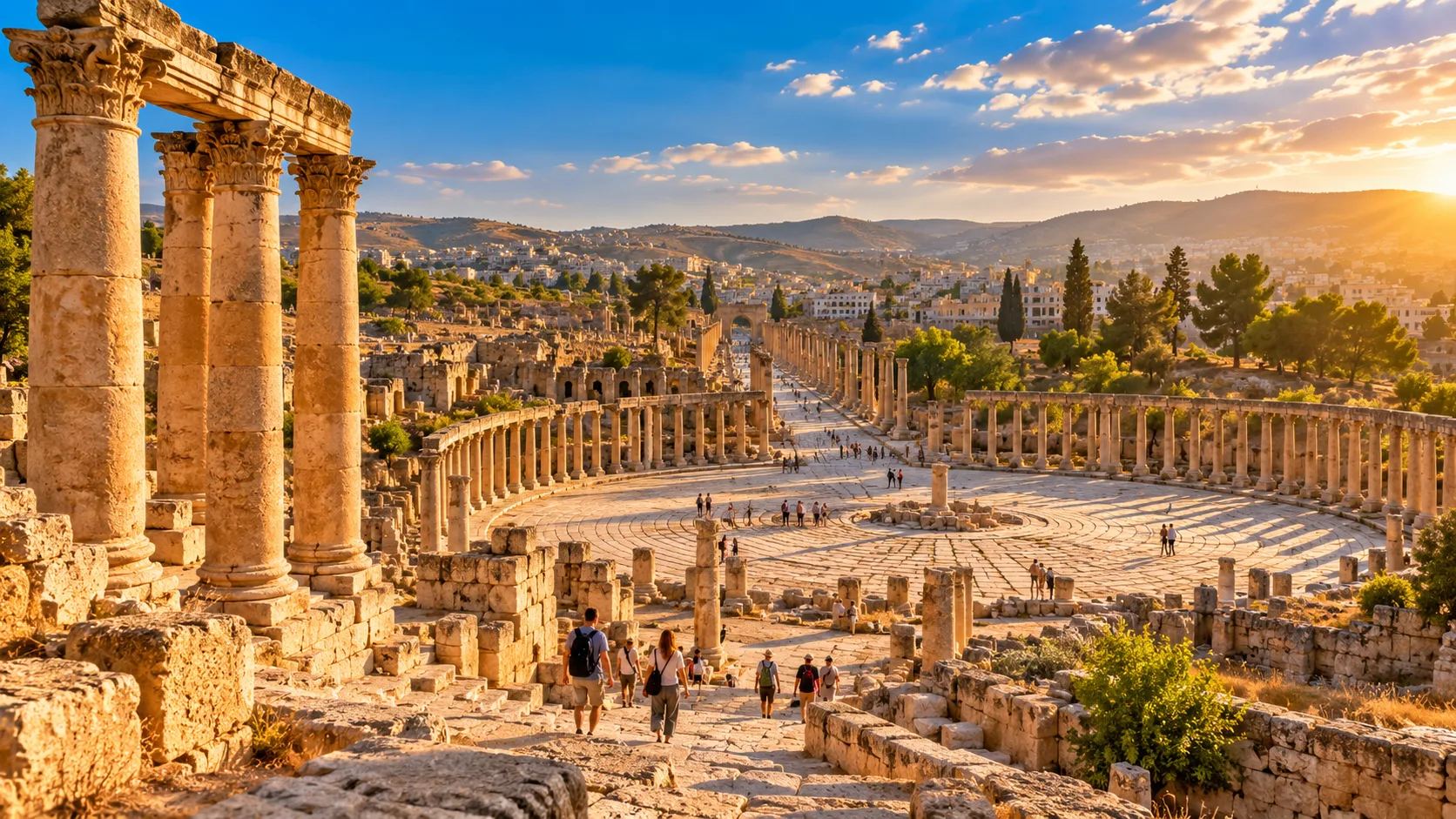
Jerash is one of Jordan’s most fascinating historical destinations, famous for its remarkably preserved Roman ruins, ancient temples, grand theaters, and impressive stone streets. Located north of Amman, this extraordinary archaeological city offers travelers an opportunity to explore thousands of years of history. Discovering the best things to do in Jerash allows visitors to experience magnificent architecture, ancient traditions, and beautiful landscapes in one memorable destination.
Once known as Gerasa, Jerash developed into an important city during the Roman period and became famous for its impressive public buildings and sophisticated urban planning. Today, its archaeological remains attract history enthusiasts, photographers, families, and curious travelers from around the world. Beyond the ancient ruins, the surrounding region features traditional Jordanian food, welcoming communities, and attractive countryside scenery.
This comprehensive Jerash travel guide explores the top attractions, historic landmarks, cultural experiences, and essential travel tips for planning your visit. You will discover famous Roman monuments, fascinating archaeological sites, nearby nature attractions, and convenient transportation options. Whether you are visiting on a day trip from Amman or exploring northern Jordan, Jerash offers unforgettable experiences worth including in your itinerary.
1. Explore the Magnificent Ancient City of Jerash
The ancient city of Jerash is one of the most impressive archaeological destinations in the Middle East, offering an exceptional glimpse into Roman urban life. Its extensive ruins include temples, theaters, public squares, colonnaded streets, and historic gateways. Walking through the archaeological complex reveals remarkable architectural achievements that have survived for centuries despite changing civilizations and historical events.
Jerash flourished during the Roman period and formed part of the Decapolis, a group of cities associated with Greek and Roman cultural influences. The archaeological remains demonstrate how the city developed as an important commercial and cultural center. Visitors can appreciate sophisticated engineering, decorative stonework, and urban planning while exploring the impressive monuments spread across the ancient settlement.
Allow several hours to experience the archaeological site properly because its attractions cover a substantial area. Comfortable walking shoes are essential, as many pathways contain uneven stone surfaces and exposed sections. Beginning your visit early can provide more comfortable sightseeing conditions, particularly during warmer months when the extensive outdoor complex receives strong sunlight.
2. Admire the Impressive Hadrian’s Arch
Hadrian’s Arch is one of the most recognizable landmarks in Jerash and provides a dramatic introduction to the city’s ancient history. This monumental gateway was constructed to commemorate the visit of Roman Emperor Hadrian in the second century AD. Its impressive proportions and decorative architectural details demonstrate the importance of Jerash during the Roman era.
The arch features an elaborate stone structure with classical columns and ornamental details that reflect Roman architectural traditions. Visitors can walk around the monument and examine its carefully restored features from different angles. Its location near the archaeological site’s southern entrance makes it one of the first major attractions encountered during a typical sightseeing route.
Hadrian’s Arch is particularly appealing for photography because its striking design creates a memorable backdrop against the surrounding landscape. Take time to appreciate the structure before continuing toward the ancient Hippodrome and other monuments. Visiting earlier in the day can provide pleasant lighting and a quieter atmosphere for exploring this historic gateway.
3. Discover the Beautiful Oval Plaza
The Oval Plaza is among the most spectacular attractions in Jerash, famous for its distinctive shape and impressive arrangement of ancient columns. This large public square formed an important architectural connection between different parts of the Roman city. Its surviving stone pavement and surrounding colonnades create one of the most recognizable views in Jordan.
Visitors can walk across the open plaza and admire the elegant Ionic columns that frame its curved perimeter. The square connects with the famous Cardo Maximus, creating an impressive visual perspective through the archaeological complex. Its unusual design highlights the creativity and architectural planning that characterized Jerash during its period of Roman development.
For excellent photographs, explore the plaza from different viewpoints rather than remaining at ground level. Nearby elevated areas around the Temple of Zeus provide impressive views of its distinctive layout. The open setting can become hot during summer afternoons, so carrying drinking water and using appropriate sun protection will improve your comfort.
4. Walk Along the Historic Cardo Maximus
Cardo Maximus is one of the most fascinating features of ancient Jerash, representing the city’s principal north-to-south street during the Roman period. The impressive avenue stretches through the archaeological site and is lined with towering columns. Walking along this historic route allows visitors to imagine merchants, residents, and travelers moving through the ancient city.
The street retains substantial sections of its original stone paving, providing remarkable evidence of Roman construction techniques. Visitors can observe architectural features associated with ancient drainage systems and surrounding commercial buildings. The long row of columns creates an impressive perspective, making Cardo Maximus one of the most photographed locations within the archaeological complex.
Take your time while walking along the avenue because interesting architectural details appear throughout the route. The surrounding structures reveal how public spaces and commercial activities were organized within the ancient settlement. Comfortable footwear is important because the original stones can be uneven and occasionally slippery, particularly after rainfall.
5. Visit the Spectacular South Theater
The South Theater is one of Jerash’s most impressive Roman monuments, known for its elegant stone seating, preserved architectural features, and remarkable acoustics. Constructed during the first century AD, the theater accommodated thousands of spectators attending performances and public gatherings. Its hillside setting provides attractive views across parts of the ancient city.
Visitors can explore the theater’s seating areas and examine the carefully designed performance space. The structure demonstrates how Roman architects combined practical construction with architectural beauty. Its impressive acoustic qualities illustrate the engineering knowledge that allowed audiences to hear performances across a large outdoor venue.
Climbing to the upper seating rows provides opportunities to appreciate the theater’s scale and surrounding scenery. However, the stone steps can be steep and uneven, so move carefully while exploring. Allow enough time to enjoy the atmosphere and observe architectural details that make this monument an important highlight of Jerash.
6. Explore the Historic Temple of Artemis
The Temple of Artemis is one of the most significant religious monuments in ancient Jerash, dedicated to the goddess associated with the city’s spiritual traditions. Its surviving columns and impressive stone foundations demonstrate the importance of religious architecture during the Roman period. The temple’s elevated position creates a memorable setting within the archaeological complex.
Visitors can admire the remaining Corinthian columns, which display intricate decorative details and impressive craftsmanship. The sanctuary once formed part of a larger monumental complex connected to the city’s public spaces. Exploring the temple provides insight into ancient religious practices and the architectural techniques used to construct important ceremonial buildings.
The Temple of Artemis is particularly appealing for visitors interested in classical architecture and historical photography. Its elevated surroundings also offer attractive views across nearby archaeological remains. Consider combining this attraction with Cardo Maximus and the North Theater to create a convenient walking route through the northern part of the site.
7. Discover the Ancient Temple of Zeus
The Temple of Zeus is another remarkable religious landmark in Jerash, situated on elevated ground overlooking the famous Oval Plaza. This ancient sanctuary reflects the importance of classical religious traditions within the city. Its impressive location and remaining architectural elements make it one of the most rewarding monuments for visitors interested in history.
The temple complex contains surviving foundations, columns, and structural features that demonstrate the scale of ancient Roman religious architecture. Visitors can explore the surrounding terraces while appreciating views across the archaeological landscape. The elevated setting also provides a clearer understanding of how the temple connected visually with the nearby public square.
Because the temple stands above surrounding attractions, reaching certain viewpoints involves climbing steps and walking uphill. Comfortable shoes and a relaxed pace make the visit more enjoyable. The impressive view toward the Oval Plaza is particularly memorable, offering an excellent opportunity to appreciate the overall layout of ancient Jerash.
8. Experience the Fascinating North Theater
The North Theater is an important historical attraction in Jerash, offering visitors a quieter setting for exploring Roman architectural traditions. Originally constructed during the second century AD, the theater served different civic and cultural purposes. Its design reflects the importance of public gathering spaces within the social and political life of the ancient city.
Although smaller than the South Theater, the North Theater features attractive stone seating and a carefully organized performance area. Visitors can examine its architectural layout and imagine how public meetings and performances once took place. The surrounding ruins also help illustrate the relationship between civic institutions and everyday community activities.
The North Theater is located farther into the archaeological complex, making it a useful destination for visitors who want to explore beyond the busiest attractions. Allow additional walking time when including it in your itinerary. Its historical significance and distinctive atmosphere make it a worthwhile stop for travelers interested in Roman architecture.
9. Visit the Ancient Hippodrome of Jerash
The Hippodrome is one of the most interesting archaeological structures in Jerash, originally designed for public entertainment and sporting competitions. During the Roman period, large crowds gathered in venues like this to watch organized events. The surviving arena provides a fascinating reminder of the importance of entertainment within ancient urban society.
Visitors can explore the remains of the long arena and examine the architectural layout associated with historical competitions. The structure once accommodated large audiences and formed an important part of the city’s recreational activities. Its scale demonstrates how entertainment venues contributed to the social life and cultural identity of Roman communities.
The Hippodrome is located near Hadrian’s Arch, making it easy to include near the beginning of your archaeological tour. Historical reenactments have been associated with the site, although performances should not be assumed to operate daily. Check current visitor information if you are interested in organized cultural demonstrations.
10. Discover the Nymphaeum and Ancient Roman Fountains
The Nymphaeum is one of Jerash’s most beautiful surviving Roman structures, originally functioning as an elaborate public fountain. Built during the second century AD, the monument reflects the importance of decorative architecture and public water systems. Its impressive stonework provides evidence of the city’s advanced engineering and appreciation for artistic design.
The fountain once featured decorative elements, water channels, and architectural details that created an attractive public gathering place. Visitors can admire the remaining structure and imagine how flowing water enhanced the surrounding urban environment. Its location along Cardo Maximus demonstrates the importance of fountains within the planning of ancient Roman cities.
The Nymphaeum is particularly interesting for travelers who enjoy examining smaller architectural details alongside major monuments. Take time to observe its carvings, structural features, and relationship with the surrounding street. Including this attraction in your walking route helps create a more complete understanding of everyday life in ancient Jerash.
11. Explore the Jerash Archaeological Museum
The Jerash Archaeological Museum provides valuable historical context for visitors exploring the extensive Roman ruins. Its collections contain artifacts discovered in Jerash and surrounding areas, representing different periods of human settlement. The museum offers an opportunity to understand how the region developed through changing civilizations, cultural traditions, and historical influences.
Visitors can examine pottery, sculptures, coins, inscriptions, and other archaeological discoveries that reveal aspects of everyday life. These objects illustrate how ancient residents conducted trade, practiced religious traditions, and interacted with their surroundings. The exhibits complement the larger monuments by explaining the smaller details of historical communities and their material culture.
A museum visit is especially worthwhile for travelers who want a deeper understanding of the archaeological complex. Consider exploring the exhibits alongside your outdoor sightseeing activities rather than treating the museum as an unrelated attraction. Checking opening hours and available displays before visiting can help you plan a more organized experience.
12. Discover Byzantine Churches and Ancient Mosaics
Jerash contains fascinating remains from the Byzantine period, including churches that demonstrate how the city’s religious landscape changed over time. These structures reveal the transition from earlier Roman religious traditions to Christian communities. Exploring their remains provides an opportunity to appreciate the different civilizations that contributed to Jerash’s architectural heritage.
Several church sites preserve traces of decorative mosaics, architectural foundations, and religious spaces that once served local communities. The surviving artwork includes geometric patterns and other traditional designs associated with Byzantine craftsmanship. These details offer valuable insight into the artistic techniques and cultural expressions of later historical periods.
Visitors interested in ancient art should allow time to explore the church remains beyond the most famous Roman monuments. Some features may be protected or have restricted access because of conservation requirements. Following marked visitor routes helps preserve these fragile archaeological remains while allowing travelers to appreciate their historical importance.
13. Explore the Natural Beauty Around Jerash
The region surrounding Jerash offers attractive countryside scenery, rolling hills, olive groves, and green landscapes that contrast with Jordan’s better-known desert environments. Exploring beyond the ancient ruins provides opportunities to experience the quieter character of northern Jordan. These surroundings are particularly appealing to travelers interested in photography, local culture, and relaxing natural scenery.
Dibeen Forest Reserve is one of the notable natural attractions in the wider Jerash region, known for its woodland landscapes and environmental importance. Visitors can appreciate the area’s distinctive vegetation and peaceful atmosphere through suitable authorized activities. Availability of access and visitor facilities should be confirmed before planning an excursion.
Combining archaeological sightseeing with nearby nature experiences can create a varied travel itinerary. Spring often brings attractive green scenery to parts of northern Jordan, while other seasons provide different landscape conditions. Travelers should respect protected environments, follow local guidance, and choose activities appropriate for their experience and available time.
14. Enjoy Traditional Jordanian Food and Local Culture
Exploring traditional Jordanian cuisine is an enjoyable part of visiting Jerash because food reflects the region’s hospitality and cultural traditions. Local restaurants and casual eateries serve dishes prepared with regional ingredients, aromatic spices, and traditional cooking methods. Dining provides an opportunity to experience everyday Jordanian culture beyond the famous archaeological attractions.
Popular Jordanian dishes include mansaf, a traditional meal commonly prepared with rice, meat, and a fermented yogurt sauce. Visitors can also enjoy falafel, hummus, grilled dishes, and freshly baked bread. Regional restaurants may offer different specialties depending on seasonal ingredients and family cooking traditions.
Consider exploring local dining establishments rather than limiting your visit to food outlets near the archaeological entrance. Reviewing menus and prices beforehand can help you select a suitable meal. Taking time to enjoy traditional food and respectful conversations with local residents can add cultural depth to your Jerash travel experience.
15. Take a Day Trip to Ajloun Castle
Ajloun Castle is a fascinating historical attraction located within reach of Jerash, making it an excellent addition to a northern Jordan itinerary. The medieval fortress stands on elevated ground overlooking the surrounding countryside. Its impressive stone architecture and scenic setting provide a different historical experience from the Roman monuments found in Jerash.
The castle was constructed during the medieval Islamic period and played an important role in regional defense and transportation networks. Visitors can explore its halls, passageways, towers, and architectural details while learning about its historical significance. The surrounding viewpoints offer beautiful scenery across the hills and valleys of northern Jordan.
Combining Jerash and Ajloun Castle can create a memorable day of cultural exploration, although adequate travel time should be included. Independent transportation or an organized excursion may simplify connections between the attractions. Checking current opening hours and allowing sufficient time at each site helps prevent an unnecessarily rushed itinerary.
Best Time to Visit Jerash for Comfortable Sightseeing
The best time to visit Jerash depends largely on weather conditions and your preferred sightseeing experience. Spring and autumn are generally appealing because temperatures are often comfortable for exploring outdoor archaeological sites. These seasons allow travelers to walk through extensive ancient ruins without the strongest heat commonly experienced during summer.
Summer can be very warm, particularly during midday when the open archaeological complex provides limited shade. Visitors traveling during this period should consider arriving early and taking regular breaks. Carrying drinking water, wearing comfortable clothing, and using suitable sun protection are important for enjoying outdoor sightseeing safely.
Winter brings cooler temperatures and occasional rainfall, which can affect walking conditions around ancient stone pathways. However, quieter visitor periods may provide a more relaxed atmosphere for exploring historical attractions. Checking local weather forecasts and seasonal opening schedules before departure helps travelers select suitable activities and prepare appropriately.
How to Travel From Amman to Jerash
Jerash is located approximately 45 kilometers north of Amman, making it one of the most convenient historical excursions from Jordan’s capital. Traveling by road allows visitors to reach the archaeological city without organizing a lengthy journey. The route passes through northern Jordan’s developing urban areas and attractive countryside landscapes.
Private transportation, organized tours, and local public transport services provide different ways to travel between Amman and Jerash. Travel times depend on traffic conditions, departure location, and the selected transportation method. Visitors who prefer a structured experience may find guided excursions convenient because transportation and sightseeing arrangements are often organized together.
If you plan to use public transportation, confirm current routes, departure locations, and return services before starting your journey. Transportation availability may differ from tourist shuttle services in other countries. Arranging your return journey in advance is particularly useful when planning to spend several hours exploring the archaeological site.
Where to Stay When Visiting Jerash
Many travelers visit Jerash as a day trip from Amman because the archaeological city is relatively close to Jordan’s capital. Staying in Amman provides access to a wider selection of hotels, restaurants, and transportation services. This arrangement can be convenient for visitors planning to explore several destinations across northern and central Jordan.
Travelers seeking a quieter atmosphere may consider accommodation within Jerash or nearby areas where suitable options are available. Smaller guesthouses and locally operated properties can provide a more relaxed experience. However, accommodation availability may be more limited than in major tourism centers, making advance research useful.
When choosing where to stay, consider your transportation arrangements, planned attractions, and overall itinerary. A central location with reliable access to your preferred destinations may provide better convenience than the cheapest available property. Reviewing recent guest feedback, cancellation policies, and included facilities helps you select accommodation suited to your travel needs.
Budget Travel Tips for Exploring Jerash
Jerash can be included in a reasonably planned Jordan itinerary without requiring luxury accommodation or expensive activities. The main archaeological complex contains numerous monuments within one visitor area, allowing travelers to experience several historical attractions through a single sightseeing visit. Planning transportation and meals carefully can help manage overall expenses.
The Jordan Pass may include admission to Jerash for eligible visitors, making it worth comparing with individual entry tickets when planning multiple attractions. However, pass conditions, eligibility, and included services should be reviewed before purchasing. Travelers visiting only a limited number of sites may find separate admission arrangements more appropriate.
Consider bringing drinking water and planning meals according to your budget rather than relying entirely on the nearest tourist facilities. Comparing transportation options can also help identify practical savings. A realistic spending plan should include admission, travel costs, food, and a small reserve for unexpected expenses during your visit.
Essential Jerash Travel Tips for First-Time Visitors
Before visiting Jerash, research the archaeological site’s opening hours, admission requirements, and available visitor services. Starting at the visitor center can help you understand the layout and identify important landmarks. Planning a logical walking route makes the experience easier because the extensive ruins contain numerous monuments spread across different areas.
Comfortable footwear is essential for navigating ancient stone streets, steps, and uneven archaeological pathways. Bring drinking water, weather-appropriate clothing, and protection from strong sunlight during warmer months. Visitors interested in historical explanations may benefit from an appropriately qualified local guide who can provide context about the city’s architecture and development.
Finally, allow enough time to appreciate the archaeological site without rushing from monument to monument. A relaxed itinerary creates opportunities to examine interesting details, enjoy scenic viewpoints, and explore less crowded sections. Respecting conservation rules and following designated visitor routes helps protect Jerash’s remarkable historical heritage for future generations.
Conclusion
Jerash is one of Jordan’s most rewarding historical destinations, offering an extraordinary collection of Roman monuments, ancient streets, impressive temples, and fascinating archaeological discoveries. From Hadrian’s Arch and the Oval Plaza to the South Theater and Temple of Artemis, the city provides memorable attractions for travelers interested in history, architecture, and cultural heritage.
Planning the best things to do in Jerash becomes easier when you organize major attractions into a manageable walking route. Exploring the archaeological museum, discovering Byzantine church remains, and enjoying nearby countryside experiences can make your visit more varied. Its convenient location near Amman also makes Jerash a valuable addition to a broader Jordan travel itinerary.
Whether you spend a few hours exploring famous Roman landmarks or dedicate a full day to historical discoveries, Jerash offers an unforgettable journey into the past. Comfortable preparation, thoughtful sightseeing, and an appreciation for local culture can make your experience especially rewarding. With its remarkable preservation and impressive atmosphere, Jerash deserves a place among Jordan’s most memorable travel destinations.
Frequently Asked Questions (FAQs)
Is Jerash worth visiting in Jordan?
Yes, Jerash is worth visiting for its remarkably preserved Roman ruins, impressive temples, historic theaters, and beautiful colonnaded streets. It is one of Jordan’s most important archaeological attractions.
How much time do you need to explore Jerash?
Most visitors should allow approximately three to four hours to explore major attractions comfortably. History enthusiasts may prefer spending longer examining the museum, temples, theaters, and additional archaeological remains.
What is the best time of year to visit Jerash?
Spring and autumn are generally excellent seasons because temperatures are often comfortable for outdoor sightseeing. Summer can be hot, while winter brings cooler conditions and occasional rainfall.
Can you visit Jerash on a day trip from Amman?
Yes, Jerash is approximately 45 kilometers north of Amman and is suitable for a day trip. Visitors can travel by private transportation, suitable local services, or organized tours.
What are the most famous attractions in Jerash?
The most famous attractions include Hadrian’s Arch, the Oval Plaza, Cardo Maximus, the South Theater, the Temple of Artemis, and the Temple of Zeus.