


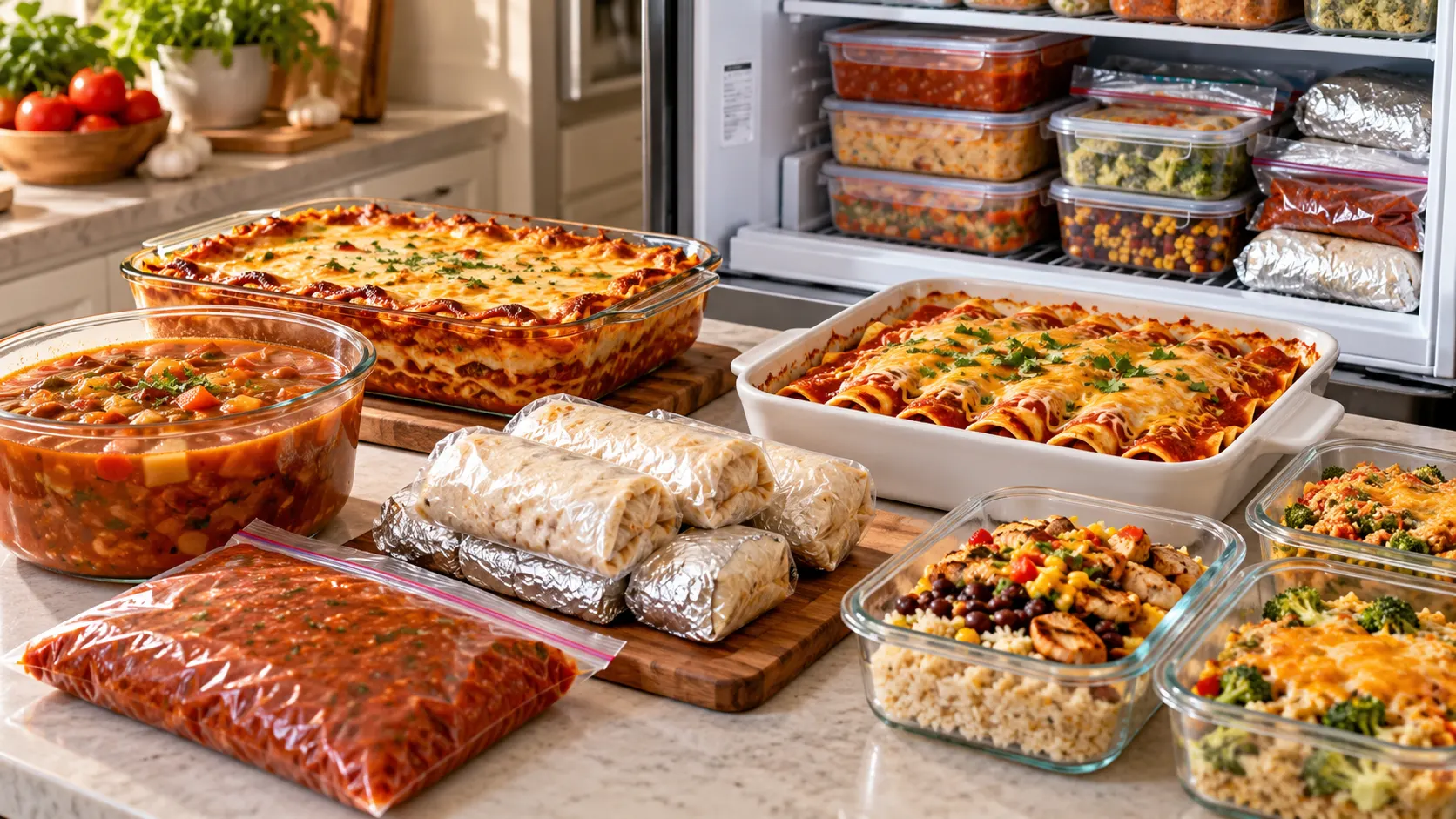
Preparing dinner every evening can feel overwhelming, especially when work, school, household responsibilities, and unexpected plans fill your schedule. After a busy day, spending an hour preparing a meal may not sound appealing. Freezer-friendly meals offer a practical solution by allowing you to prepare delicious homemade food ahead of time and enjoy it whenever needed.
The best freezer-friendly meals for easy dinners include casseroles, soups, pasta bakes, curries, meatballs, burritos, and other dishes that maintain their flavor and texture after freezing. These meals can help simplify weekly cooking, reduce unnecessary food waste, and make dinner preparation more convenient. With proper storage and reheating techniques, frozen homemade meals can be both satisfying and practical.
Whether you are cooking for yourself, preparing family dinners, or organizing meals for particularly busy weeks, freezer cooking provides plenty of flexibility. This guide explores delicious freezer meal ideas, preparation methods, storage tips, thawing instructions, and common mistakes to avoid when freezing homemade food.
Why Freezer-Friendly Meals Are Perfect for Busy Families
Freezer-friendly meals make everyday cooking easier by reducing the amount of preparation required during busy evenings. Instead of starting dinner from scratch, you can reheat a prepared dish or cook something assembled in advance. This approach provides more flexibility when unexpected commitments interrupt your usual meal schedule or leave you with limited cooking time.
Another advantage of freezer cooking is the opportunity to prepare several portions during one cooking session. Recipes such as soups, casseroles, and stews can often be doubled without significantly increasing preparation work. Dividing these dishes into smaller portions makes them convenient for individuals, couples, and families with different daily schedules.
Freezing meals can also help reduce food waste when ingredients are purchased in suitable quantities. Vegetables, cooked grains, and prepared sauces can be used in different recipes before they spoil. Keeping a variety of homemade dishes in the freezer also makes it easier to enjoy familiar meals without frequent last-minute grocery shopping.
1. Freezer-Friendly Chicken and Rice Casserole
Chicken and rice casserole is a comforting dinner option that combines tender chicken, rice, vegetables, and a flavorful sauce. The ingredients create a satisfying meal that can be prepared in a single baking dish. Its familiar flavors and simple preparation make it suitable for busy households looking for convenient freezer dinners.
To prepare the casserole, combine fully cooked chicken, prepared rice, vegetables, and a suitable creamy or tomato-based sauce. Transfer the mixture into a freezer-safe baking dish and allow it to cool promptly. Cover tightly before freezing, or divide the casserole into individual containers for easier reheating.
When ready to serve, thaw the casserole safely in the refrigerator or follow a suitable cooking method for frozen food. Heat it until the center reaches 165°F (74°C). Adding a small amount of liquid during reheating may help prevent the rice from becoming dry.
2. Homemade Lasagna for Easy Family Dinners
Lasagna is one of the most popular freezer-friendly meals because its layered ingredients hold together well during storage. Pasta sheets, tomato sauce, vegetables, and cheese create a hearty dish that works for ordinary weeknights or family gatherings. Both meat-based and vegetarian versions can be prepared ahead of time.
Begin by preparing your preferred sauce and arranging alternating layers of pasta, filling, and cheese in a baking dish. Follow the instructions for the type of lasagna noodles being used. You can freeze an appropriately assembled unbaked lasagna or cook it first and freeze individual portions.
For convenience, label the container with the preparation date and any relevant cooking instructions. Thaw the dish safely in the refrigerator before baking, or use a recipe specifically designed for cooking from frozen. Ensure the center is thoroughly heated before serving, particularly when the filling contains meat.
3. Beef and Vegetable Stew for Comforting Meals
Beef and vegetable stew is an excellent freezer meal because its rich broth and tender ingredients generally maintain their flavor during storage. Traditional recipes often include beef, carrots, onions, celery, and potatoes. The combination creates a comforting dinner that can be enjoyed during colder evenings or whenever a hearty meal sounds appealing.
Start by browning suitable pieces of beef and cooking them slowly with vegetables, broth, and seasonings. Simmer until the meat becomes tender and the ingredients are fully cooked. Allow the stew to cool promptly before transferring it into freezer-safe containers with enough space for expansion.
Some potatoes may develop a softer texture after freezing and reheating, so consider using suitable varieties or adding freshly cooked potatoes when serving. Thaw the stew in the refrigerator or reheat it safely from frozen using an appropriate method. Stir regularly and ensure the entire dish becomes thoroughly hot.
4. Chicken Curry for Quick and Flavorful Dinners
Chicken curry is a versatile freezer-friendly dinner that can be prepared with different spices, sauces, and vegetables. Tomato-based and many coconut milk-based curries generally freeze well, making them practical for batch cooking. Their rich flavors also provide an appealing alternative to traditional casseroles and pasta dishes.
To prepare chicken curry, cook onions, garlic, ginger, and selected spices before adding chicken and sauce ingredients. Simmer until the chicken is thoroughly cooked and the flavors have combined. Allow the curry to cool promptly before dividing it into suitable containers for freezing.
When reheating, stir the curry gently to restore a consistent texture, particularly if the sauce separates slightly. Serve with freshly prepared rice, flatbread, or another preferred side dish. Freezing the curry separately from rice allows more flexibility and can make individual portions easier to manage.
5. Freezer-Friendly Meatballs in Tomato Sauce
Homemade meatballs are useful freezer meals because they can be incorporated into several different dinner recipes. They work well with spaghetti, rice, sandwiches, or roasted vegetables. Preparing a large batch provides convenient protein options that can be adapted to different flavors and serving styles.
Combine ground meat with appropriate seasonings, breadcrumbs, and other ingredients according to your chosen recipe. Shape the mixture into evenly sized meatballs and cook them thoroughly before cooling. Place the cooked meatballs in freezer-safe containers, either separately or covered with prepared tomato sauce.
Freezing meatballs in sauce can help maintain moisture and simplify dinner preparation. When ready to eat, thaw them safely or reheat directly from frozen using a suitable cooking method. Ensure they reach 165°F (74°C) when reheating, and serve with your preferred pasta or vegetables.
6. Vegetable Soup for Healthy Freezer Dinners
Vegetable soup is one of the easiest meals to prepare in advance because it allows you to combine many different ingredients in a single pot. Carrots, celery, onions, tomatoes, beans, and seasonal vegetables create a flavorful base. The recipe can be adjusted according to household preferences and available ingredients.
Begin by cooking chopped vegetables with a small amount of oil before adding broth and seasonings. Simmer until the ingredients are tender and the flavors have developed. For additional variety, include lentils or beans, while keeping pasta or delicate ingredients separate when texture is important.
Soup should be cooled promptly and divided into suitable freezer containers rather than left in a large pot at room temperature. Leave some space for the liquid to expand during freezing. Individual servings are particularly convenient because you can reheat only the amount needed for dinner.
7. Homemade Burritos for Convenient Freezer Meals
Burritos are among the most practical freezer-friendly meals because they can be prepared and wrapped individually. Tortillas filled with beans, cooked rice, vegetables, cheese, and fully cooked protein create satisfying portable dinners. They are especially useful for households where family members eat at different times.
Prepare the fillings before assembling the burritos and allow cooked ingredients to cool promptly. Place manageable portions of each filling inside a tortilla, fold the edges securely, and wrap it tightly. Avoid using excessive watery sauces or fresh lettuce before freezing because these ingredients may affect the final texture.
Store individually wrapped burritos inside suitable freezer bags or containers to reduce freezer burn. When ready to eat, remove any non-microwave-safe wrapping and reheat using an appropriate method. Check that the center becomes thoroughly hot before serving, especially when meat, rice, or other cooked fillings are included.
8. Lentil and Chickpea Curry for Vegetarian Dinners
Lentil and chickpea curry is an excellent plant-based freezer meal that provides satisfying flavor and flexibility. The combination of legumes, vegetables, and warming spices creates a hearty dish without requiring meat. It can be served with rice, flatbread, or roasted vegetables for a simple weeknight dinner.
Start by cooking onions, garlic, tomatoes, and spices before adding prepared chickpeas and lentils. Simmer with water, broth, or coconut milk until the ingredients reach the desired consistency. Adjust the seasonings according to personal preference, using ingredients such as cumin, turmeric, coriander, or ginger.
Once the curry has cooled promptly, divide it into individual freezer-safe containers. Lentils and chickpeas generally maintain a pleasant texture after freezing, making them suitable for advance preparation. When reheating, add a small amount of liquid if the sauce has thickened during storage.
9. Baked Ziti for Easy Pasta Nights
Baked ziti is a popular freezer-friendly pasta dish that combines pasta, tomato sauce, and cheese. It offers many of the comforting qualities of lasagna while usually requiring less time for assembly. The dish can be prepared in a large baking tray or divided into smaller portions.
Cook the pasta until slightly firm so it does not become overly soft during reheating. Combine it with tomato sauce, cheese, and optional vegetables or cooked protein. Transfer the mixture into a suitable baking dish and cool promptly before covering and freezing.
Baked ziti can be thawed safely in the refrigerator before reheating until the center is thoroughly hot. Covering the dish during part of the reheating process may help retain moisture. You can serve it with a fresh salad or steamed vegetables for a varied family dinner.
10. Shepherd’s Pie for a Hearty Freezer Meal
Shepherd’s pie is a comforting baked dish traditionally made with ground lamb, vegetables, and mashed potatoes. A similar dish prepared with beef is commonly called cottage pie. Both versions can be suitable for freezer cooking when the ingredients are prepared and stored correctly.
Cook the ground meat thoroughly with onions, carrots, peas, and a suitable savory sauce. Transfer the filling into a baking dish and cover it with a layer of prepared mashed potatoes. The assembled pie can be baked immediately or cooled promptly and frozen for a future dinner.
Mashed potatoes may change texture slightly after freezing, but a well-prepared topping can still reheat pleasantly. Thaw the pie in the refrigerator or follow cooking directions designed for frozen casseroles. Heat until the center reaches a safe temperature, and allow the dish to settle briefly before serving.
11. Stuffed Bell Peppers for Simple Weeknight Dinners
Stuffed bell peppers offer a colorful and practical freezer-friendly meal that can be customized with different fillings. Cooked rice, beans, vegetables, and ground meat are common ingredients. The peppers provide a convenient individual serving format, making them useful for families and smaller households.
Begin by preparing the filling and cooking any meat thoroughly. Remove the seeds from the bell peppers, fill them with the prepared mixture, and arrange them in a baking dish. Depending on your recipe, the peppers can be baked before freezing or assembled in advance for later cooking.
Allow the peppers to cool promptly before placing them into freezer-safe containers. During reheating, cover them when appropriate to prevent excessive drying. The peppers may become softer after freezing, but their flavor remains enjoyable when combined with well-seasoned fillings.
12. Homemade Pizza for Freezer-Friendly Family Meals
Homemade pizza can be prepared in advance and frozen for a convenient dinner option. It allows you to choose preferred sauces, cheeses, vegetables, and cooked toppings. Smaller individual pizzas are particularly practical because they can be baked separately according to each person’s preferences.
Start by preparing pizza dough and shaping it into the desired size. Partially baking the crust before adding toppings can help maintain its texture during freezing and final baking. Spread a suitable sauce over the base and add cheese, vegetables, and fully cooked meat toppings if desired.
Freeze the assembled pizzas on a flat surface before wrapping them securely for longer storage. When ready to eat, bake according to the recipe’s frozen pizza instructions until the crust is cooked and toppings are thoroughly heated. Pair the pizza with vegetables or another favorite side dish.
Best Ingredients for Freezer-Friendly Meals
Choosing suitable ingredients can make a significant difference in the quality of frozen meals. Cooked beans, lentils, tomato-based sauces, soups, casseroles, and many cooked meat dishes generally freeze well. These ingredients often maintain acceptable flavor and texture when stored and reheated properly.
Some foods require more attention because freezing can change their texture. Lettuce, cucumbers, and other high-water vegetables may become soft after thawing. Dairy-based sauces can sometimes separate, while cooked potatoes and pasta may become softer than they were before freezing.
These changes do not necessarily make the food unsafe, but they can affect the eating experience. Consider freezing sauces separately or adding delicate ingredients after reheating. Understanding which foods freeze well makes it easier to choose recipes that remain satisfying when prepared in advance.
How to Freeze Homemade Meals Properly
Proper freezing begins with cooling cooked meals promptly and selecting containers designed for freezer storage. Use airtight containers, freezer-safe bags, or suitable baking dishes that protect food from excessive air exposure. Dividing large recipes into smaller portions can make cooling, freezing, thawing, and reheating more convenient.
Label each container with the meal name and preparation date so you can identify its contents easily. Keep your freezer at 0°F (-18°C) or below to maintain safe frozen storage conditions. Freezing prevents bacterial growth while food remains continuously frozen, although it does not destroy every harmful microorganism.
For best quality, many homemade frozen meals are enjoyable when used within approximately two to three months, depending on their ingredients and packaging. Food kept continuously frozen at the proper temperature can remain safe longer, but flavor and texture may gradually decline. Organizing meals by date helps you use older portions first.
How to Thaw and Reheat Frozen Dinners Safely
Thawing food correctly is important because harmful bacteria can multiply when perishable meals remain at unsafe temperatures. The refrigerator is generally the most convenient place to thaw frozen dinners gradually. Place containers on a tray when necessary and allow enough time for larger dishes to defrost completely.
Microwave thawing is another option when the food will be cooked or reheated immediately afterward. Cold-water thawing can also be appropriate for properly sealed packages when the water is changed regularly and the food is heated promptly. Never leave perishable frozen meals on the kitchen counter for extended periods.
Reheat cooked leftovers to an internal temperature of 165°F (74°C), checking the center with a food thermometer when appropriate. Stir microwave meals to reduce uneven heating and allow suitable standing time. Some prepared dishes can be reheated directly from frozen, provided the method heats the food evenly and thoroughly.
How to Plan a Week of Freezer-Friendly Dinners
A practical freezer meal plan begins with selecting recipes that your household already enjoys. Choose a combination of pasta dishes, soups, curries, casseroles, and other meals to create variety. Preparing several portions of familiar dishes is often easier than experimenting with many complicated recipes at the same time.
Before cooking, review your pantry, refrigerator, and freezer to identify ingredients that are already available. Create a grocery list based on the meals you want to prepare, and consider recipes that share common ingredients. This approach can simplify shopping while reducing the chance of purchasing unnecessary food.
You do not need to prepare an entire month of dinners in one session. Begin with two or three recipes and freeze additional portions whenever you cook. Over time, this approach can create a useful selection of ready-to-reheat meals without turning freezer preparation into an exhausting weekly task.
Common Freezer Meal Mistakes to Avoid
One common mistake is placing large quantities of hot food directly into an overcrowded freezer. This can slow cooling and temporarily affect the temperature of nearby food. Divide cooked meals into shallow containers, refrigerate them promptly, and freeze them once sufficiently cooled.
Another mistake is using containers that do not seal properly. Exposure to air can contribute to freezer burn, causing dry patches and reducing flavor quality. Choose suitable packaging, remove excess air from freezer bags, and avoid repeatedly opening containers before the food is needed.
Failing to label meals can also make freezer organization difficult. Without preparation dates, it becomes harder to decide which portions should be used first. Labeling, organizing, and checking your freezer regularly can help maintain food quality while ensuring that prepared meals remain easy to locate.
Conclusion
Freezer-friendly meals are an excellent solution for simplifying dinner preparation during busy weeks. Dishes such as lasagna, chicken curry, vegetable soup, beef stew, meatballs, and stuffed peppers can be prepared ahead of time and stored for convenient future meals. Their versatility makes them useful for both small households and larger families.
Successful freezer cooking depends on choosing suitable recipes, preparing ingredients safely, and using appropriate storage methods. Dividing meals into practical portions and labeling containers can make weekly dinner planning easier. Proper thawing and reheating are equally important for maintaining food safety and enjoyable flavor.
Whether you are beginning meal preparation or improving an existing routine, start with a few recipes you already enjoy. Gradually build a collection of homemade frozen dinners that match your household’s needs. With thoughtful planning, freezer-friendly meals can make everyday cooking more convenient, organized, and enjoyable.
Frequently Asked Questions
What Are the Best Meals to Make and Freeze?
Lasagna, chicken curry, casseroles, soups, chili, meatballs, burritos, and shepherd’s pie are excellent freezer-friendly options. These dishes generally maintain good flavor and texture when properly prepared, packaged, and reheated.
How Long Can Homemade Meals Stay in the Freezer?
Many homemade meals maintain their best quality for approximately two to three months. Food kept continuously frozen at 0°F (-18°C) remains safe longer, although quality may gradually decline.
Can You Freeze Cooked Rice and Pasta?
Yes, cooked rice and pasta can be frozen when cooled promptly and stored properly. Their texture may change slightly after reheating, so avoid overcooking them before freezing.
Is It Better to Freeze Meals Before or After Cooking?
Both methods can work depending on the recipe. Soups and curries are often frozen after cooking, while certain casseroles and assembled dishes can be frozen before their final baking.
How Do You Reheat Frozen Meals Without Drying Them Out?
Use appropriate reheating temperatures, cover dishes when helpful, and add a small amount of liquid to foods that need moisture. Always ensure cooked leftovers reach 165°F (74°C) throughout before serving.